
custom logistics & workwear patches houston
The Tajimas are humming on the Houston shop floor. You can smell the ozone and the heated adhesive. Pick up one of our custom logistics patches. Feel the weight of the 12oz twill substrate. It’s stiff. It’s heavy. It’s built for the Houston supply chain.
We manufacture these for trucking fleets, warehouse crews, and Port of Houston teams. This gear doesn’t quit when the shift gets long. It doesn’t fray when you’re moving freight. It’s industrial hardware for people who work for a living.
get a quote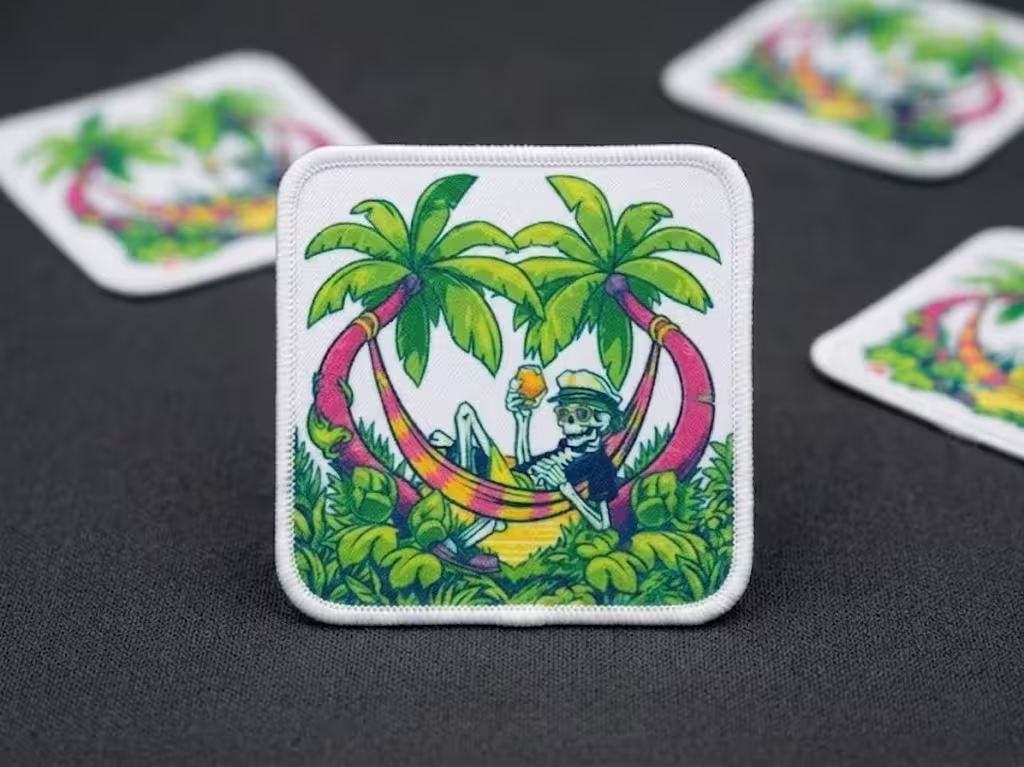
Engineered for the Beltway 8 Grind
Cheap patches fail on the road. I see it every day. A company buys cheap imports to save a buck. Within a month, the Texas sun bleeds the color out of the thread. The logo turns white.
Then the humidity hits. Gulf Coast air is thick. It acts like a solvent on cheap glue. The patches start peeling off the safety vests. They look like wet stickers.
Our patches survive the “Beltway 8 grind.” We build them for constant UV exposure. We build them for high-heat industrial laundering. We use industrial adhesives with a 320-degree melting point. That’s the magic number. It’s high enough to survive a 120-degree truck cabin in July. But it’s calibrated not to scorch your 12oz twill substrate during application.
The Physics of Thread and Salt Air
If you’re working near the Port of Houston, you’re dealing with salt air. Salt is corrosive. It rots standard cotton thread in weeks.
We use Madeira poly-neon thread. It is a 100% polyester filament. It is chemically resistant to salt and chlorine. It won’t rot. It won’t break down when the humidity hits 95%. This is why our patches stay on the uniforms while the cheap ones end up in the gutter.
Our Industrial Tech Stack
We don’t run hobbyist machines here. We run a professional floor.
Multi-head Tajima Machines:
We run heavy-duty Tajimas. These are the gold standard. They punch through 12oz twill substrate without breaking a needle. We use 75/11 sharp needles for precision. They never skip a beat, even at 1,000 stitches per minute.
Manual PXF Digitizing:
Auto-digitizing is garbage for fleet logos. It creates messy paths and bird-nesting. We map every chain stitch by hand. We define the start and end points of every needle strike. This locks the edges down for the long haul.
Exact Pantone Matching:
Your corporate colors are your brand. We don’t “get close.” We match exact Pantone codes. We use UV-stable thread that stays true to your brand for years.
Outfitting the Houston Supply Chain
We serve the backbone of the Texas economy. Each sector has different technical needs.
Port of Houston Trucking Fleets
Truckers are in and out of the sun all day. They need bulk runs for driver uniforms. We use high-vis reflective substrates for night-shift port operations. These patches catch the light from warehouse loaders. They keep your drivers visible and alive.
Ship Channel Maintenance & Cargo Crews
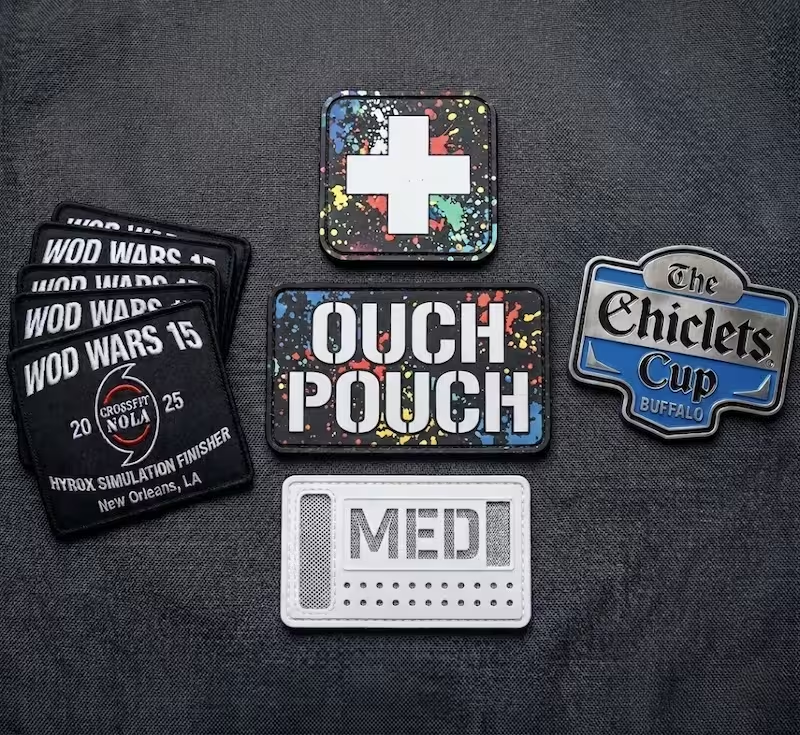
These guys are covered in grease and crude oil. They need gear that can be scrubbed. We stitch heavy-duty twill that survives rugged environments. We also offer PVC patches. You can wipe crude oil right off PVC with a rag.
Warehouse & Distribution Center Staff
Warehouse work is high-friction. Workers are constantly brushing against boxes and racking. We use a tight merrowed border. It seals the edges of the patch. It prevents snagging. We recommend lightweight sew-on patches for 12-hour shifts. They offer the most comfort.
Material Specifications
We don’t build “pretty” patches. We build industrial gear. Here is the breakdown of our Houston-spec materials.
| Feature | Houston Industrial Spec | Why It Matters |
|---|---|---|
| Thread | UV-Stable Madeira Poly-Neon | Stops the Texas sun from bleaching your fleet logo white. |
| Substrate | 12oz Heavyweight Twill | Provides the structural weight needed to survive industrial washes. |
| Adhesive | 320-degree Melting Point | Prevents patches from peeling off in a 120-degree truck cabin. |
| Border | High-Tension Merrowed Edge | Seals the 12oz twill so it never frays on cargo equipment. |
| Core | Rigid Buckram Lamination | Keeps the patch flat and professional, even after 100 washes. |
| Ink | Gaseous Dye-Diffusion | Ink bonds to the fibers so it never cracks, even on stretchy gear. |
The Science of Dye Sublimation for Logistics
Sometimes a fleet logo is too complex for thread. Maybe you have a QR code for driver check-ins. Or a logo with fine gradients.
We use a gaseous dye-diffusion process. We don’t print on top of the fabric. We turn the ink into a gas. We force it into the polyester fibers under high heat.
How to Outfit Your Fleet
We make the B2B process fast. We know you have a schedule to keep. We don’t do fluff. We do production.
1. Submit Specs & Fleet Art
Send us your corporate logo. Tell us your total driver count. We need clean vector art. This allows us to map the Tajimas with precision. If your art is low-res, our digitizers will fix it.
2. Approve Digital Strike-Off
We don’t guess on the factory floor. We send you a digital proof. We ensure exact corporate color matching. We check the border thickness. You approve it before we fire up the machines.
3. Production & Freight
We fire up the multi-head Tajimas. We run shifts day and night. We perform a 100% quality check. We deliver fast to your logistics hub or dispatch office. We use local couriers for the Houston area to beat the freight delays.
Frequently Asked Questions (FAQ)
Will the Texas sun fade my fleet logo?
Our UV-stable Madeira poly-neon thread and gaseous dye-diffusion inks are chemically engineered to resist the bleaching Texas sun. We know the heat on the Ship Channel is brutal. Standard threads turn white in 30 days. Our materials stay vibrant for the life of the garment.
Are these patches wash-proof for industrial laundries?
Yes, our industrial-grade patches survive heavy-duty washing cycles because we use high-tension stitching and 320-degree heat-seal glue. Industrial laundries use high heat and harsh chemicals. We build our patches to handle the high-heat dryers and the most aggressive detergents. They won’t fray or peel.
Do you offer reflective patches for night safety?
We manufacture ANSI-compliant reflective patches using silver-base substrates that ensure your logistics staff stay visible at night. These are mandatory for Port of Houston operations. They catch the light from warehouse loaders and truck headlights. They provide 360-degree visibility for your ground crews.
What is the turnaround for a 500+ patch fleet rollout?
We complete 500-piece fleet rollouts in 10 to 14 days by running our multi-head Tajima machines around the clock. We have the industrial capacity to handle massive trucking fleets. We don’t miss deadlines. If you’re on a tight schedule for a new contract, we can expedite the run.
Can you print QR codes on workwear patches?
Yes, we use high-definition dye sublimation to print scannable QR codes that never fade or crack. This is perfect for driver identification or safety manual access. The print is so sharp that even small codes scan perfectly on the first try.