
custom pvc patches in houston
At Houston Patch Co., we manufacture custom PVC patches built for the outdoors. pick one up and bend it. It is made of solid, flexible rubber. there are no threads to fray and no colors to fade.
These patches are completely waterproof. if they get covered in mud or grease on the job, you just wipe them clean with a wet rag. We build tough, 3d rubber gear that survives the Texas weather without falling apart.
Get a free quote
Trusted by Leading Organizations & Partners





see our latest PVC patches runs.
We make all our patches right here in Houston. these recent examples show why rubber patches are the best choice for the outdoors. They are completely waterproof and very easy to clean, because they are made of solid rubber, there are no threads to fray or fall apart. they stay bright in the sun and won’t peel off in the rain. We make gear that is built to last a long time.


why houston brands choose rubber patches.
Out here in the Gulf Coast sauna, standard thread fails. We deal with 100-degree heat indexes and 90% humidity. Cotton threads rot. Rubber doesn’t care.
they survive 100-degree heat.
Leave them in a hot truck cab. Bake them out on a rig in the Ship Channel. The PVC compound won’t warp or melt in the Texas summer.
they don’t soak up water or grease.
Drop it in a puddle. Wipe it on your jeans. It looks brand new. Oil and drill mud slide right off.
the colors stay bright in the sun.
We mix the color pigment straight into the liquid rubber before pouring it. The UV rays won’t bleach it out like cheap thread.
you can wash them with a hose.
Guys come off a 12-hour shift caked in grime. You can literally spray these down with an industrial hose.
PVC vs. Embroidered: what is the difference?
I run 20-head Tajima machines for our custom embroidered patches all day long. I love thread. But thread has limits. Thread frays. Thread gets stained by crude oil.
why PVC Patches last longer.
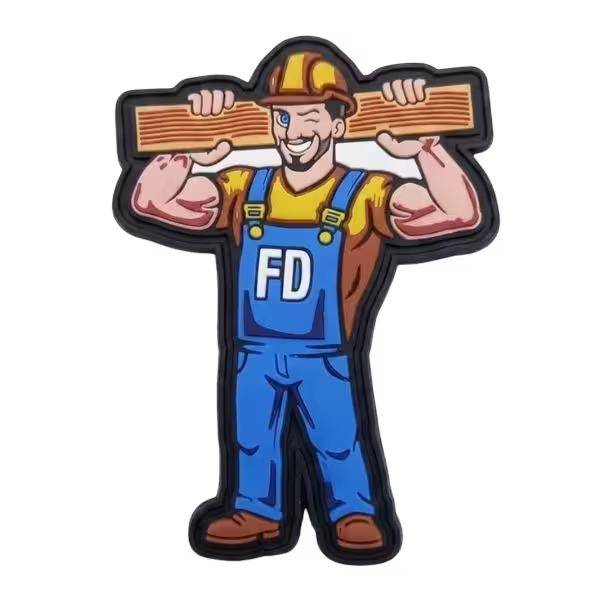
PVC rubber is practically bulletproof. Drag it across a concrete floor. Snag it on metal grating. It won’t pull or unravel.
why PVC patches looks cleaner.
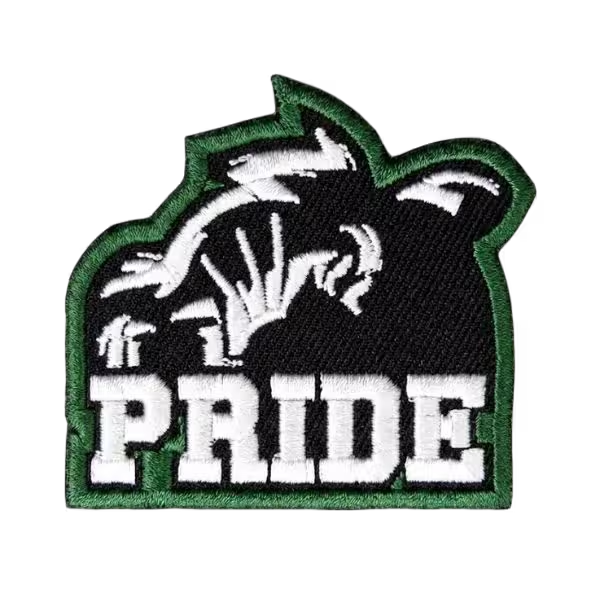
Thread blends colors by layering thousands of tiny stitches. Rubber separates colors using physical, raised walls in the mold. You get razor-sharp lines. Tiny text is perfectly readable from ten feet away. No fuzz. No fuzzy edges.
who we make patches for in houston.
The Texas energy sector doesn’t run on “almost ready.” We build these for people who play hard and work harder.
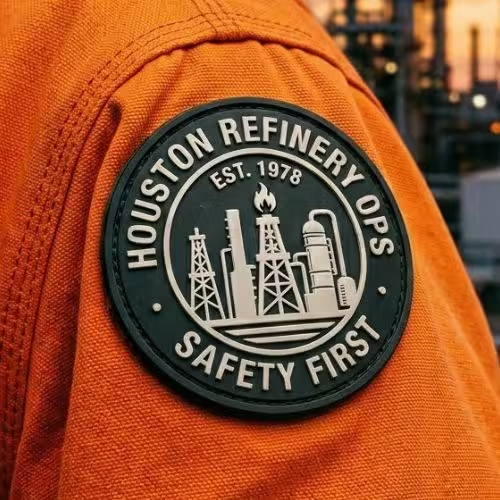
oil field and refinery workers.
Down in the Energy Corridor, these custom oil and gas patches go on high-vis coveralls and heavy gear bags. They resist solvents.

police, fire, and rescue teams.
HPD and HFD run these custom tactical patches on tactical vests. Rubber wipes clean with a sanitizing wipe. Blood and chemicals sit on the surface.
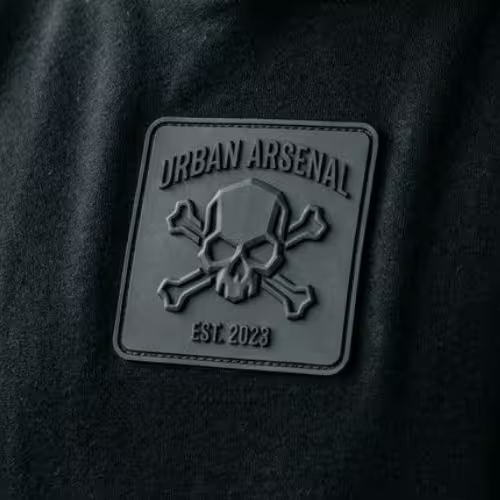
local gym and clothing brands.
Guys over in Montrose and the Inner Loop use these for streetwear and tactical gyms. Rubber adds weight. It feels expensive on a heavyweight hoodie or a nylon backpack.
choose the look you want.

flat look (sharp and clean).
We pour the layers in sharp, 2D steps. Crisp lines. Easy to read quickly.
3d look (rounded and deep).
We sculpt the metal mold so the rubber curves outward. You get a domed, raised profile. Feels like a heavy-duty badge.
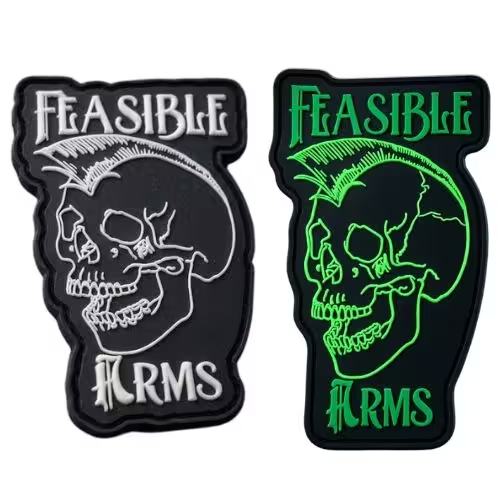
patches that glow in the dark.
We mix raw phosphor powder directly into the liquid rubber. Perfect for night shift turnarounds at the plant or low-light tactical operations.
how to attach your patches.
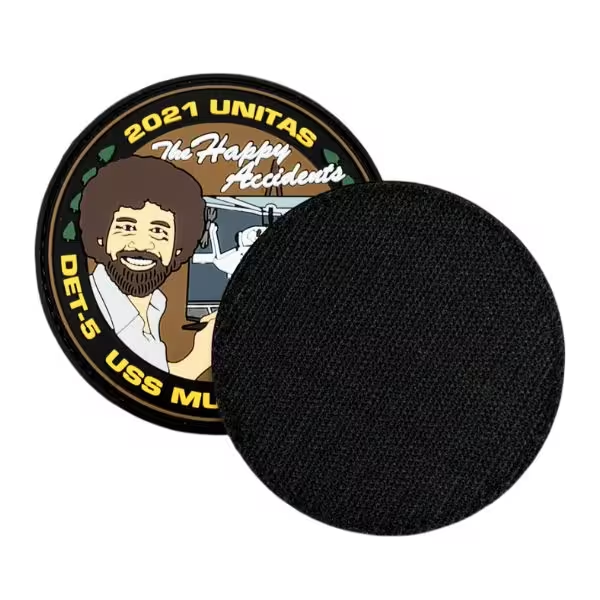
velcro for easy swapping.
We sew the hook-and-loop backing straight to the rubber. You get that loud “bite” when you rip it off a tactical vest.
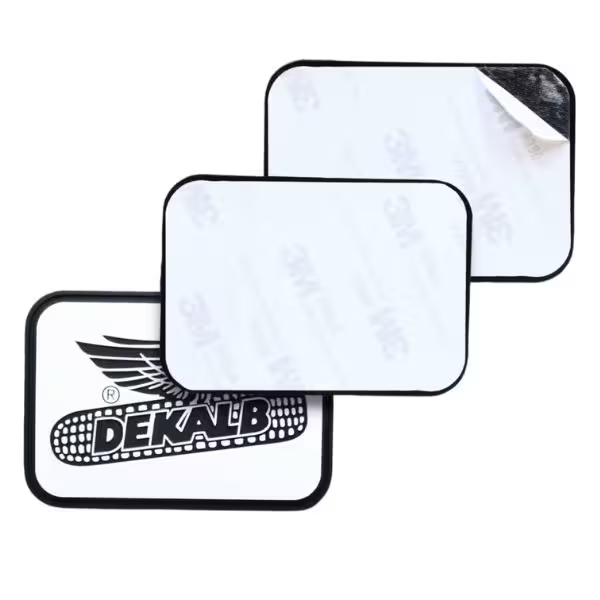
strong stickers for hard hats.
We use 3M industrial adhesive. It sticks to polycarbonate safety helmets in 110-degree heat and refuses to let go.
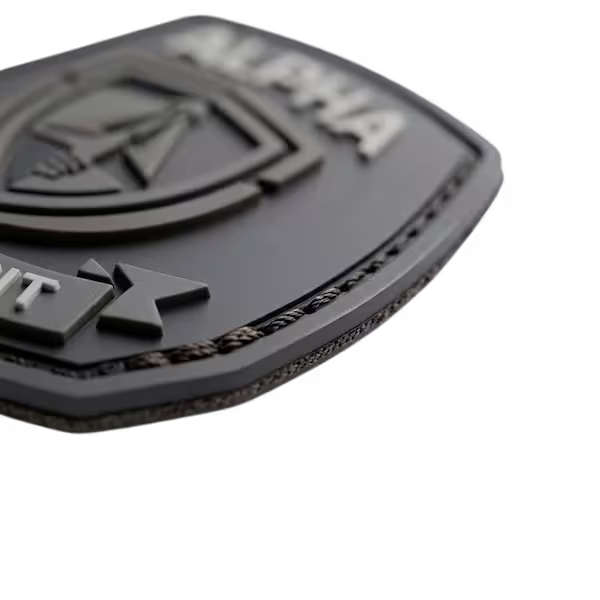
sew-on for the strongest hold.
We mold a thin sewing channel right around the outer edge. My operators drop a needle straight through that channel so the heavy 40-weight thread sits completely flush.
how to attach your patches.
Learn how to stick or sew your patches with our patch backing guide.
velcro for easy swapping.
We sew the hook-and-loop backing straight to the rubber. You get that loud “bite” when you rip it off a tactical vest.
strong stickers for hard hats.
We use 3M industrial adhesive. It sticks to polycarbonate safety helmets in 110-degree heat and refuses to let go.
sew-on for the strongest hold.
We mold a thin sewing channel right around the outer edge. My operators drop a needle straight through that channel so the heavy 40-weight thread sits completely flush.
How We Calculate the Price.
Why the Metal Mold Costs Money. Every rubber patch starts with a steel mold. We machine it to your exact design every line, every depth, every edge. That mold is a one-time cost. It’s not cheap. But once it exists, it’s yours.
Every production run after that uses the same mold. Your per-unit cost drops every time you reorder. Think of it like a key. Cutting the blank costs money. Making copies after that? Almost nothing.
How Size and Quantity Change the Cost
Two variables move your price more than anything else:
Size: Larger patches use more rubber compound per unit. A 4-inch patch costs more per piece than a 2-inch patch. Simple math.
Quantity: The mold cost spreads across your total unit count. 50 patches means the mold cost hits hard. 500 patches means it barely registers. The sweet spot for most Houston B2B buyers is 100–250 units on a first run.
Tell us your size, your quantity, and your backing type. We’ll build the quote in plain numbers, no hidden tooling surprises.
how to order in 3 easy steps.
1. send us your artwork.
Email us a crisp vector file. Or send a photo of a sketch drawn on a bar napkin. Tell us the dimensions.
2. check your free digital mock up.
My setup team builds a digital proof. You look at it. You verify the spelling, the borders, and the colors. You sign off.
3. get your patches.
We run production. We box them up. You put them on your gear.
how we make your patches in our shop.
Station 01 / Tooling making the metal mold.
We mill the design into a brass block. Every color in your design gets separated by a tiny metal wall.
Station 02 / Injection pouring the liquid rubber.
Operators inject liquid PVC into mold cavities. We bake it in an industrial oven. The heat cures and solidifies the rubber.
Station 03 / Logistics shipping from rice village.
We run quality control right here. We check the borders. We test the velcro bite. Then we ship them straight out of Houston.
Frequently Asked Questions (PVC)
Is there a minimum order for PVC patches?
Yes. 50 pieces. Cutting the metal mold takes hours. We cannot tie up the CNC machine for a single patch.
Can I put a gradient on a PVC patch?
No. PVC molding doesn’t support gradients, each color needs a defined physical boundary in the mold. If your design requires gradients, choose custom printed patches instead.
Are PVC patches heavy?
Yes. They feel substantial. Do not put a massive 4-inch PVC patch on a thin running shirt. It pulls the fabric down. Put them on heavy canvas, tactical vests, or thick jackets.
What is the difference between PVC and Silicone patches?
PVC is tougher. It holds razor-sharp corners and text easily. Silicone feels softer and handles extreme oven-level heat better, but it costs more and is harder to detail.